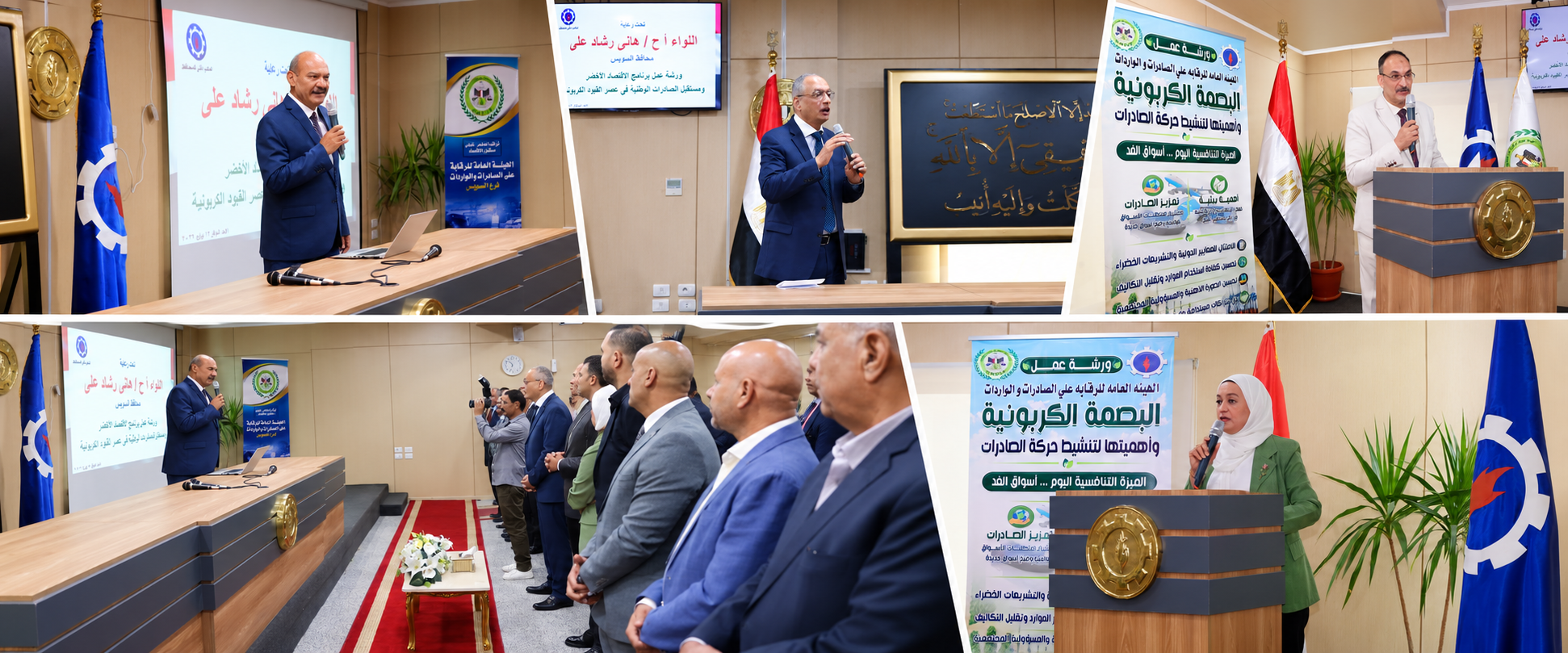
As part of the GOEIC's efforts to support the transition towards the green economy and enhance the competitiveness of Egyptian exports, the GOEIC organized an extensive workshop in Suez Governorate entitled “The Green Economy Program and the Future of National Exports in the Era of Carbon Constraints” with a broad participation from executive and academic bodies, representatives of the business community and the exporters.
The GOEIC's Chairman, Engineer Essam El Naggar, affirmed that the shift towards the green economy has become one of the basic requirements for the continuous access of Egyptian exports to the global markets, in light of the expansion in applying the environmental requirements and carbon restrictions, referring that the GOEIC is working to spread awareness of these requirements, and to qualify exporters to deal with them, through training programs, building capacities and the provision of technical support to enhance the ability of Egyptian products to compete in international markets.
He explained that the GOEIC continues to develop its technical and advisory services system, that supports the commitment of production facilities to the international environmental standards, and contributes to raising the quality of Egyptian products and enhancing the confidence of foreign markets, in line with the state’s directions towards sustainable development.
On his part, Suez Governor Major General/ Hani Rashad affirmed that the transition to the green economy is one of the main pillars for achieving sustainable development and enhancing the competitiveness of the national economy, noting that the governorate supports all initiatives aimed at spreading a culture of sustainability, raising environmental awareness, and building cadres capable of keeping pace with global changes.
The workshop included a specialized presentation on the concept of the carbon footprint and its importance in reducing emissions, its role in improving the quality of Egyptian products and increasing their ability to meet the environmental requirements of international markets, along with reviewing best practices for rationalizing resources consumption, maximizing production efficiency, and mechanisms for implementing the carbon footprint system in the facilities.
The workshop also witnessed an interactive discussion about the challenges facing the exporters in light of modern environmental requirements, and the opportunities offered by the green economy to boost the competitiveness of Egyptian exports, while emphasizing the importance of continuous cooperation among the concerned entities to expand the application of the carbon footprint system, and to provide the technical support to exporters, in order to contribute to achieving the goals of sustainable development and increasing the access of Egyptian products to the global markets.