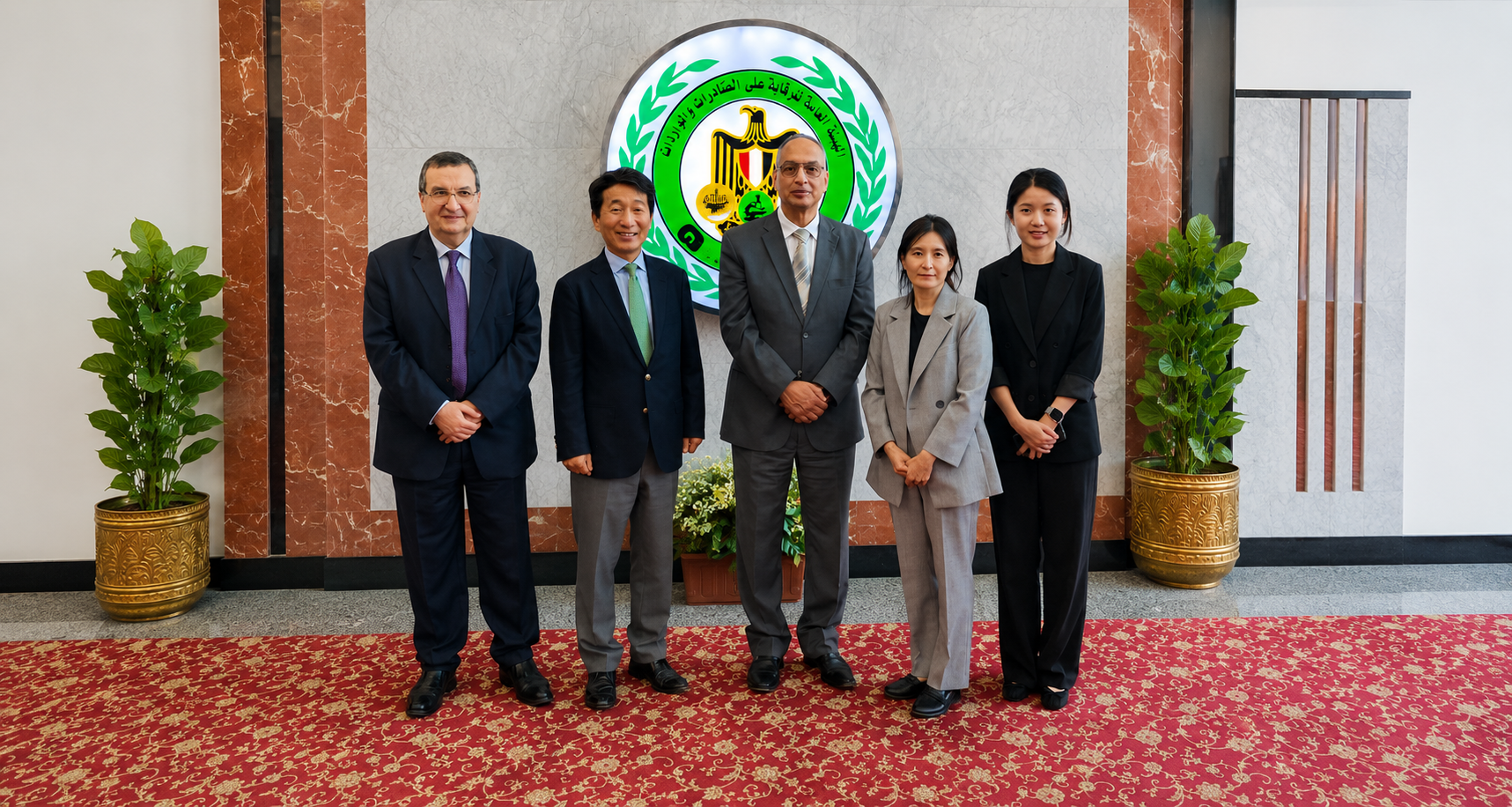
As part of the directives of the political leadership to strengthen international partnerships that support the economic development, and in implementation of the policy of the Ministry of Investment and Foreign Trade aimed at developing the foreign trade system, raising the efficiency of services provided to the business community, and facilitating trade while ensuring the quality and safety of products traded in the markets, the GOEIC, at its headquarters in Dekheila Port in Alexandria, received the Ambassador Kim Wan-jong, Ambassador of the Republic of Korea to the Arab Republic of Egypt, and his accompanying delegation, in one of the first field visits he has conducted since assuming his duties in Cairo.
The visit comes within the framework of the distinguished strategic relations between the Arab Republic of Egypt and the Republic of Korea, and the keenness of both sides to follow up on joint development cooperation projects, notably the project being implemented by the GOEIC to develop the system for monitoring imported non-food industrial goods, funded by the Korean government with a total value of $11.5 million.
The project is one of the leading projects in the field of digital transformation and trade facilitation. This project aims to create an integrated digital system that supports the efficiency of imports control, promotes applying modern risk management methodologies, and raises the efficiency of technical and laboratory services, in addition to supporting the post-release control system and tracking products in the markets, in order to achieve the balance between protecting the consumer and facilitating international trade.
During the visit, the current executive project status and the progress of its three main components were reviewed. This includes developing and implementing an integrated electronic risk management system on the basis of GOEIC's Risk-Based Inspection System (e-RBI), thereby contributing to increasing the efficiency of procedures and accelerating the release of low-risk shipments.
The project components also include the establishment and development of a Laboratory Information Management System (LIMS) to automate and manage laboratory operations and procedures and link them electronically to the GOEIC’s work system, in such way that enhances the speed and accuracy of sample handling and issuance of test results, and it raises the efficiency of laboratory performance.
The components also include establishing and developing a digital system for tracking the non-food industrial products and market surveillance, with the aim of enhancing the ability to track products traded in local markets, support post-release monitoring activities, and ensure that products comply with approved technical specifications, thereby contributing to raising the level of compliance and protecting the consumer.
The visit comprised a field tour inside GOEIC’s laboratories and its technical facilities at Dekheila Port, whereas the Korean Ambassador and his accompanying delegation reviewed the available technical and technological capabilities, applicable inspection and testing mechanisms, and the role of the project in developing GOEIC’s digital infrastructure and enhancing the efficiency of the institutional work system according to the best international practices.
During the meeting, both sides confirmed the importance of continuing cooperation and joint coordination to support efforts to modernize and develop the quality control system and facilitate trade, that will positively affect the improvement of the business environment, enhance the competitiveness of the Egyptian economy, and support the sustainable development goals and Egypt’s Vision 2030.
This visit reflects the confidence that the GOEIC enjoys as a key partner in implementing institutional reform and digital transformation programs in cooperation with international development partners, which contributes to building a more efficient, intelligent and capable regulatory system that keeps pace with global developments in fields of trade and risk management.