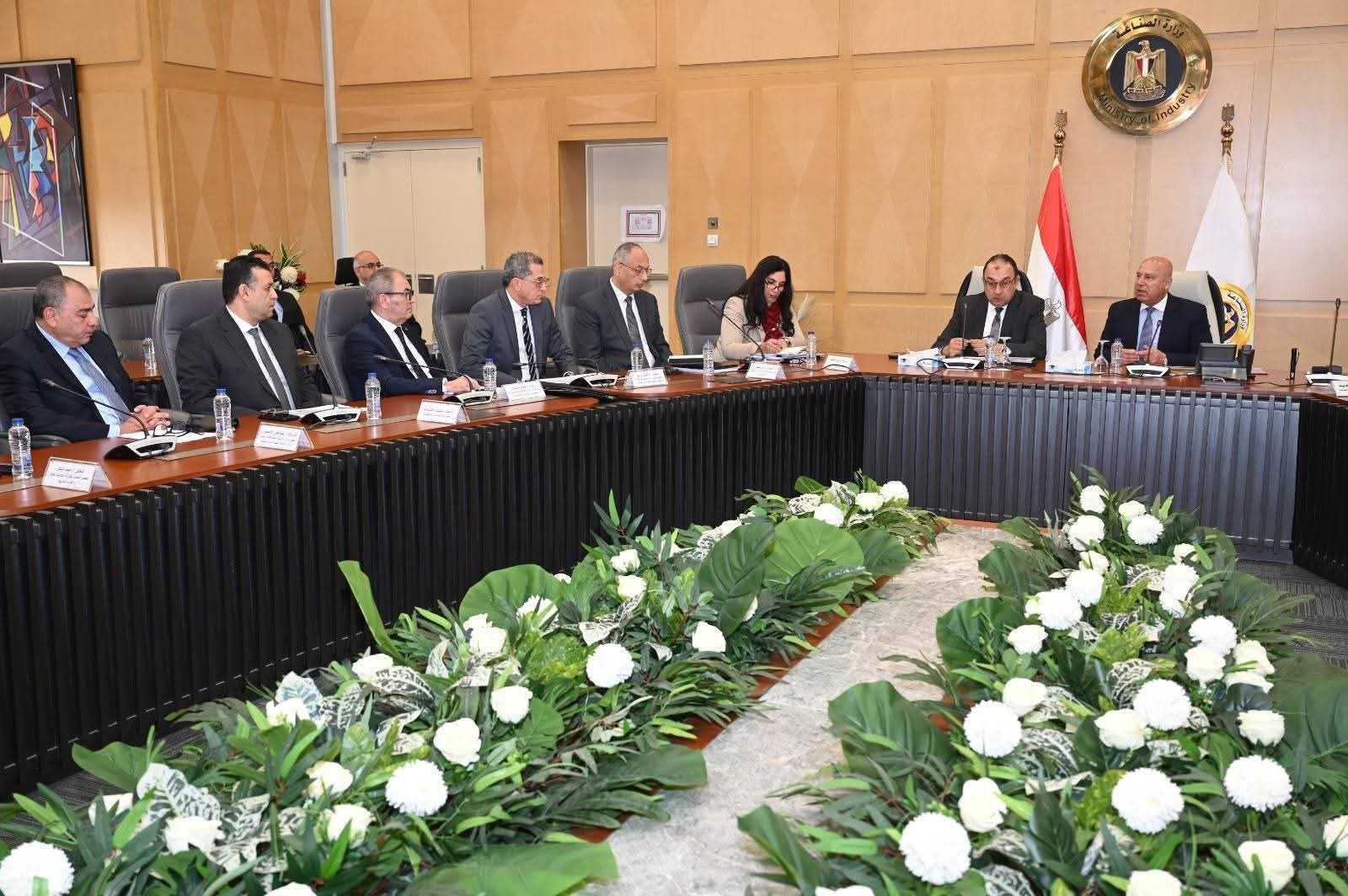
Lieutenant General Engineer/ Kamel El-Wazir, Deputy Prime Minister for Industrial Development and Minister of Industry and Transport, held a meeting with Engineer/ Mohamed Sheimy, Minister of Public Business Sector, Engineer/ Essam El-Naggar, President of the General Organization for Export and Import Control (GOEIC), and representatives of Chamber of Ready-Made Garments and Home Furnishings, Chamber of Textile Industries, and Export Council for Ready-Made Garments to discuss ways to deepen local manufacturing and reduce import bill, in the presence of a number of leaders from the Ministries of Industry and Public Business Sector.
At the beginning of the meeting, the Deputy Prime Minister for Industrial Development and Minister of Industry and Transport confirmed that this meeting is the first of meeting series that will be held periodically to study Spinning, Weaving and Ready-made Garments Sector for upgrading such sector, especially in light of the great global demand for the establishment of ready-made garment factories in Egypt, pointing out the need to focus on deepening all links of the industry, which include ginning, spinning, finishing, dyeing and weaving, especially in light of the availability of the raw materials necessary for manufacturing, foremost among them cotton and linen.
The minister affirmed that the Ministry of Industry is fully prepared to provide all means of support to any serious investor who wishes to establish a spinning and weaving factory to meet the needs of local manufacturers, reduce the import bill for spinning and weaving, and bridge the gap in the supply chain for ready-made clothes and furnishings by providing all types of yarns, including cotton, linen, polyester, and wool. He pointed out the need for local manufacturers to convince international brands that import ready-made clothes produced in Egypt to allocate a portion of this production to the local market.
During the meeting, a number of challenges facing the spinning and weaving industry were reviewed, including the huge investments required to establish factories for this industry, while the return from manufacturing yarns is weak compared to the return from manufacturing ready-made clothes, in addition to the small number of countries of origin from which cotton yarns are allowed to be imported to Egypt, the inadequacy of local yarn production to meet the needs of the local industry, the small number of agricultural areas for cotton, as well as the lack of Egyptian expertise in yarn manufacturing, in addition to the inability of local factories specializing in textiles and ready-made clothes to compete with imports due to the lack of strict control over quality and price.
The minister pointed to the committee formed by the Ministry of Industry and representatives of a number of concerned bodies and the Federation of Egyptian Industries to address customs evasion and practices harmful to Egyptian industry, which will intensify its work during the coming period to ensure that spinning, weaving or ready-made garment factories import raw materials and production supplies according to production capacity, noting the need to tighten control over all factories, especially factories operating under the free zone system or factories that import raw materials and production supplies for the purpose of manufacturing and re-exporting them under the temporary admission system.
The minister confirmed the importance of serious private sector involvement in partnerships with government sector companies to achieve industrial integration by providing the land, buildings and machinery necessary for manufacturing through government companies and utilizing the extensive experience and knowledge of the private sector in operation and management, and that this should be done through joint financing that ultimately benefits all parties, as well as increasing investment in the petrochemical sector to reduce polyester imports. He directed the Industrial Development Authority to stipulate that any investor applying for a license to establish a ready-made garment factory must also include spinning and weaving in its production to achieve the required integration.
For his part, Engineer Mohamed Sheimy, Minister of Public Business Sector, affirmed the importance of having a system for governing the trade and circulation of cotton to meet Egypt’s needs for yarns, in addition to increasing the tendency of factories and companies to manufacture yarns and textiles and increase investments in them to maximize added value. He emphasized the readiness and welcome of the Ministry of Public Business Sector to its factories specializing in spinning and weaving in (7) companies affiliated with the partnership with the private sector, which contributes to meeting the needs of the local market and enhancing exports, and that the Ministry is ready to provide the necessary support to translate these partnerships into real projects that serve the Egyptian industry.